



AI Infrastructure Buildout
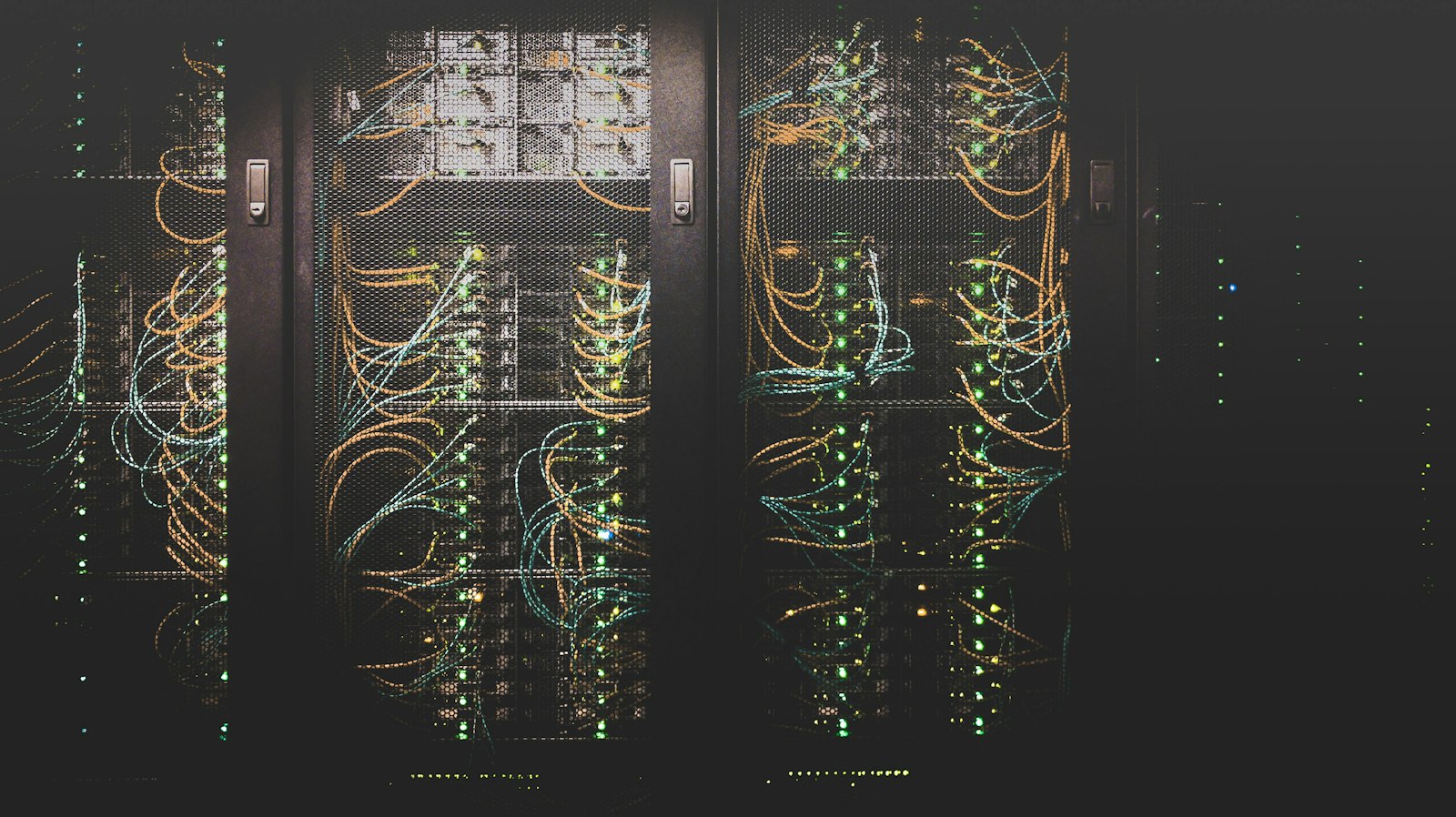
Vietnam's data center pipeline has surpassed $5 billion in announced investment, propelled by the AI Law that took effect on 1 March 2026 and a national strategy to capture regional AI compute demand. Projects led by Viettel, VNG-STT, CMC, and a Microsoft-linked consortium at Tan Phu Trung Industrial Park are adding more than 500 MW of planned capacity. The buildout offers entry points in power, cooling, connectivity, and land, but it also raises questions about data sovereignty, grid reliability, and the pace of regulatory implementation.
The AI Law and Its Investment Signal
The National Assembly passed Law No. 134/2025/QH15 on 10 December 2025, and it entered into force on 1 March 2026. The statute is Vietnam's first standalone AI law and, according to legal analysts at Baker McKenzie and Allen & Gledhill, one of the earliest comprehensive AI statutes in Southeast Asia. It introduces a risk-based classification system for AI systems, mandatory conformity assessments for high-risk deployments, transparency requirements for AI-generated content, and express rules allocating civil liability among developers, deployers, and affected parties.
The risk tiers divide AI systems into low, medium, and high categories. High-risk systems must undergo conformity assessment before deployment. Depending on the sector, this may require third-party certification or self-assessment through registered bodies. Healthcare, education, and finance benefit from an 18-month grace period until 1 September 2027; all other sectors must comply by 1 March 2027. Foreign providers offering high-risk AI systems in Vietnam must appoint a local contact point and, where certification is required, establish an authorised representative or commercial presence.
Beyond compliance, the law establishes several pro-investment mechanisms. A National AI Development Fund is scheduled to become operational by 1 July 2026, offering grants and financing for research commercialisation. A regulatory sandbox allows AI developers to test products for up to three years under relaxed liability rules. The law also recognises AI models and algorithms as assets that can be contributed as legal capital, creating a new fundraising pathway for technology ventures. For investors, the policy message is that Vietnam intends to govern AI without discouraging the capital inflows required to build domestic compute capacity.
The Ministry of Science and Technology oversees enforcement, with the National AI Committee required to be operational by July 2026. Sub-decrees defining the high-risk category list, certification procedures, technical standards for transparency labelling, and administrative penalties are still pending. Enterprises should treat the March 2027 compliance deadline as a planning anchor rather than a waiting signal. Data center operators that can demonstrate compliance readiness early are likely to enjoy procurement advantages with government and regulated enterprise customers.
Domestic Investment Pipeline
According to the GTJA Securities Vietnam ICT Sector Update Report for January 2026, the country currently operates 41 commercial data centers with a combined designed capacity of 221 MW. The announced project pipeline is several times larger. Viettel, the military-backed telecom group, is developing a 140 MW facility with approximately 10,000 server racks at Tan Phu Trung Industrial Park in Ho Chi Minh City. The initial phase is expected to come online in the first quarter of 2026, with full completion targeted before 2030. Construction began in April 2025.
Separately, Viettel is investing roughly $700 million in a Tier III AI-integrated data center at Hoa Lac near Hanoi, with an initial opening planned for August 2025 and a roadmap to upgrade the facility to hyperscale standards by 2030. The Hoa Lac campus is strategically positioned near government research institutions and Viettel High Tech's semiconductor manufacturing plant, suggesting an integrated ecosystem for defence, AI research, and advanced electronics.
The largest announced private project is a consortium at Tan Phu Trung Industrial Park involving Kinh Bac City Development Holding Corporation, Accelerated Infrastructure Capital, VietinBank, G42 Group, Microsoft, FPT Corporation, VinaCapital, and Viet Thai Group. The project is budgeted at approximately $2 billion, with 200 MW of IT load and roughly 100,000 GPUs. If executed at the announced scale, it would become the largest AI-focused data center in Vietnam and one of the most significant in mainland Southeast Asia. The consortium structure also illustrates the blended finance model that Vietnam appears to favour for strategic technology infrastructure: domestic real estate and banking groups, a global technology investor, and a state-linked telecom player sharing capital and offtake risk.
CMC Telecom has committed $250 million to a 30 MW facility in Ho Chi Minh City Hi-Tech Park, with expansion potential to 120 MW. Construction is expected to begin in 2026. ST Telemedia Global Data Centres, in partnership with VNG Corporation, is building a 60 MW AI-focused facility in Ho Chi Minh City, with operations scheduled for the first half of 2026. IPTP Networks has announced a $200 million, 10 MW AI-ready center in Da Nang Hi-Tech Park, with construction expected to begin in March 2026 and operations in 2027.
Further south, Saigon Asset Management has announced a $1.5 billion, 150 MW project in southern Vietnam with operations expected between 2026 and 2027. In central Vietnam, Create Capital Vietnam, Haimaker.ai, and Vietnam Data Gen have formed a joint venture to develop a $1 billion, 100 MW facility in Da Nang, with phase one targeting 10–20 MW. The Ministry of Public Security's National Data Center, budgeted at VND 16,800 billion, began operations in August 2025 and is expanding through DC 2 in 2026–2028 and DC 3 in 2028–2030.
Hyperscaler Positioning and Data Sovereignty
Google, Microsoft, and Amazon have all expressed interest in Vietnamese cloud infrastructure, but committed hyperscale capital expenditure has remained more measured than in neighbouring markets. Microsoft committed over $1 billion to Thailand in May 2024 and a further $6.5 billion to Southeast Asia in early 2026, with Singapore receiving the largest share. Amazon Web Services committed $9 billion to Singapore and $5 billion to Thailand over 15 years. Google launched its Bangkok cloud region in January 2026 and has confirmed cloud region plans for Malaysia.
The amended Law on Telecommunications, which took effect in July 2024, permits 100 percent foreign ownership of data center projects. Yet industry observers quoted in the Vietnam Economic Times have noted that ownership rights alone have not triggered large-scale foreign direct investment. The binding constraint is perceived to be data governance clarity. Hyperscalers need predictable rules on data localization, cross-border transfer, government access requests, and personal data protection enforcement before committing billions in capital expenditure.
For US-listed companies such as AWS, Google, and Microsoft, these questions carry significant compliance and disclosure implications under US securities and export control frameworks. Chinese technology groups face a different calculus. They generally encounter fewer domestic restrictions on data handling, but their participation can raise questions among Western customers about exposure to US technology export controls and listing compliance. This bifurcation is pushing Vietnam toward a two-tier market: domestic and Chinese-invested facilities serving sovereign and enterprise workloads, and Western hyperscalers waiting for clearer rules before deploying owned infrastructure.
The hesitation creates a window for domestic and regional players. Viettel, VNG, CMC, and FPT are building capacity now, positioning themselves as the default providers for government, military, banking, and telecom workloads that are sensitive to foreign control. Their early mover advantage could prove durable if data sovereignty remains a policy priority. At the same time, these domestic groups are partnering with foreign technology suppliers for chips, cooling, and cloud software, creating opportunities for equipment vendors and systems integrators that do not require direct facility ownership.
Power, Talent, and Cooling Constraints
Vietnam's operating cost advantage is substantial by regional standards. According to CMC Telecom representatives cited by GTJA Securities, data center investment and operating costs in Vietnam are approximately $6–7 million per MW, or 40–60% below Singapore. Industrial electricity prices range from 6–10 US cents per kWh, roughly one-third of Singapore's level. These differentials underpin the investment case for serving both domestic demand and regional overflow from capacity-constrained Singapore, where land, power, and permitting constraints have tightened materially since 2023.
However, cost is not the only variable that matters. AI workloads are reshaping data center engineering. Schneider Electric Vietnam estimates that AI workloads could account for 15–20% of total data center electricity consumption by 2028, up from 8 percent in 2023. Dense GPU clusters can draw 700 watts per processor and require liquid cooling at rack densities that many legacy Vietnamese facilities are not equipped to handle. Air-cooled designs that were adequate for enterprise workloads are becoming obsolete for AI training clusters. The market is bifurcating between conventional colocation capacity and AI-optimized facilities designed for high thermal loads, redundant substations, and low-latency fibre connectivity.
Talent is another bottleneck. Vietnam's R&D spending remains around 0.43–0.5% of GDP, well below the government's 2030 target of 2 percent and far behind Malaysia, South Korea, and Taiwan. The country produces strong software engineering graduates, but the specialised skills required for data center operations, cloud architecture, network engineering, and AI infrastructure management are in short supply. Salaries for experienced cloud architects and infrastructure operations managers have been rising faster than general IT wages. Investors should factor training costs, retention programmes, and recruitment timelines into their market entry models.
Grid reliability in southern Vietnam has been a recurring concern. Industrial zones around Ho Chi Minh City experienced periodic power shortages during the dry seasons of 2023 and 2024, and similar risks persist in 2026. Data center operators are responding with on-site diesel and gas backup generation, battery storage, and direct power purchase agreements with solar and wind developers. The ability to secure firm, low-carbon power with 24/7 availability will increasingly differentiate premium facilities from commodity capacity. Investors in solar, wind, battery storage, and gas peaking plants in southern Vietnam may find data center offtake agreements an attractive long-term revenue anchor.
Cooling water availability is an underappreciated constraint. Liquid cooling systems consume significant volumes of water, and the Mekong Delta region has faced saline intrusion and seasonal drought stress. Facilities in Ho Chi Minh City and surrounding provinces will need water treatment and recycling systems to meet environmental permitting requirements and to insure against supply interruptions. Vendors of closed-loop cooling, water treatment, and heat rejection equipment are likely to see rising demand as AI data center construction accelerates.
For investors and corporates, the near-term opportunity lies in the enabling layers of the AI infrastructure stack. Land and industrial real estate in approved zones, high-voltage substations and switchgear, cooling and power distribution equipment, fibre and submarine cable landing stations, and workforce development programmes all offer more attractive risk-adjusted returns than building commodity colocation capacity. The data center market itself is capital-intensive and competitive, but the adjacent services required to build and operate AI-grade capacity remain undersupplied. Firms that can combine technical capability with local regulatory knowledge are positioned to capture value as Vietnam moves from planning to construction at scale.