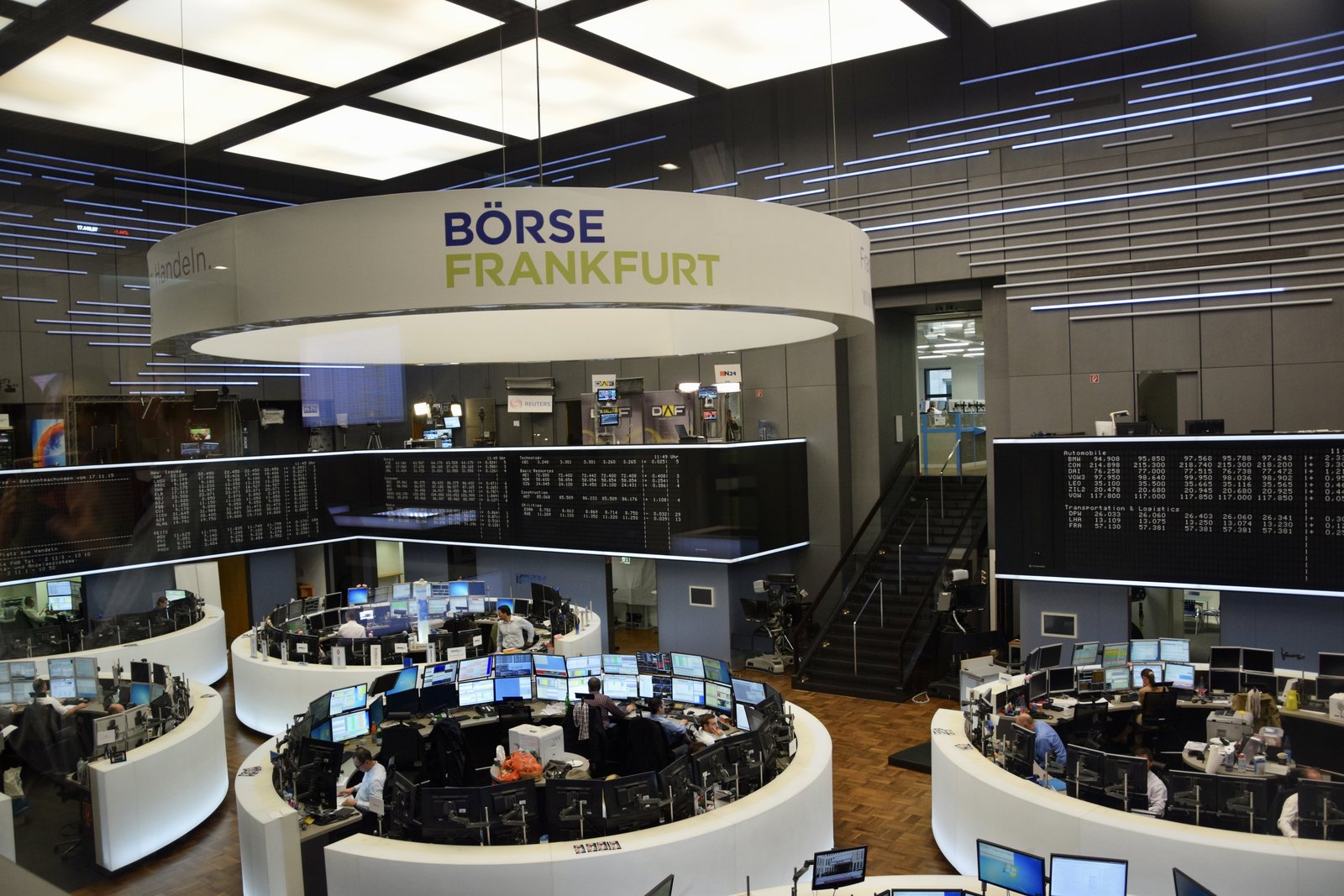





In the quiet corridors of MSB Bank's former headquarters, the echo of financial stability now reverberates with the silence of an industry undergoing a profound metamorphosis. The clamor of Hanoi fades into the background as Vietnam's banking sector navigates through uncharted waters, leaving behind the relics of a bygone era.
EU Merger Rules Overhauled to Foster Competition
The European Union (EU) has recently overhauled its merger rules, a strategic move aimed at fostering competition within the banking sector. This regulatory shift is significant as it directly impacts how banks operate and compete, potentially leading to a more dynamic and efficient financial landscape. The new rules are designed to scrutinize mergers more closely, ensuring that they do not lead to an unhealthy concentration of market power, which could stifle competition and innovation. This move is particularly timely, given the rapid changes in the financial sector driven by technological advancements and the increasing importance of digital banking services.
One of the key aspects of the overhauled merger rules is the increased focus on consumer protection. "The new rules will ensure that mergers do not lead to reduced consumer choice or poorer services," per the European Commission. This implies that any merger proposal will now be evaluated based on its potential impact on consumers, including the availability of services and the quality of those services. The implication is that banks seeking to merge must demonstrate how their proposed merger would not negatively affect consumers, potentially leading to more consumer-centric banking practices.
Another significant change is the introduction of stricter scrutiny for cross-border mergers. The EU aims to ensure that such mergers do not compromise the stability of the financial system or lead to the creation of monopolies. This is particularly important in the context of the EU's single market, where cross-border banking operations are common. The overhauled rules are expected to encourage banks to maintain a diverse range of services and to prevent the formation of banking conglomerates that could dominate the market, thereby preserving competition.
The overhaul also includes provisions to ensure that the merger process is more transparent and efficient. This is crucial for maintaining trust in the financial sector and for ensuring that the process is fair and equitable for all parties involved. "The new rules will streamline the merger review process, making it faster and more predictable," according to the European Commission. This could lead to a more agile banking sector that can respond quickly to market changes and opportunities, ultimately benefiting both banks and their customers.
Lastly, the overhauled merger rules are expected to have a broader impact on the EU's financial market as a whole. By promoting competition and consumer protection, the new rules could lead to increased innovation and a more robust financial system. This is particularly important in the current economic climate, where the financial sector is under pressure to adapt to new challenges and opportunities. The implications of these changes are far-reaching, potentially shaping the future of banking in the EU and influencing global financial practices.
FDIC Proposal Impacts Midsize Bank Mergers
The Federal Deposit Insurance Corporation (FDIC) has recently proposed changes to its merger guidelines, which could significantly impact the landscape of midsize bank mergers. The proposal aims to streamline the process and reduce regulatory burden, potentially encouraging more banks to consider consolidation. The new guidelines are designed to make it easier for banks to merge, which could lead to increased efficiency and cost savings, as banks can pool resources and eliminate duplicative services. This move could also lead to a more competitive banking sector, as larger banks resulting from mergers may be better positioned to offer a wider range of services and compete for a larger share of the market.
According to the FDIC, the proposed changes are intended to "promote economic inclusion" and ensure that mergers do not result in a reduction of services to underserved communities. This is a critical consideration, as the consolidation of banks can sometimes lead to the closure of branches in less populated areas, potentially leaving some customers without easy access to banking services. By emphasizing the need to maintain services in these areas, the FDIC is signaling its commitment to ensuring that all communities have access to banking services, even as the industry undergoes significant changes.
The proposal also includes provisions to ensure that mergers do not lead to an undue concentration of market power. This is particularly important in the banking sector, where a few large institutions can have a significant impact on the economy and financial stability. By setting guidelines that prevent excessive concentration, the FDIC is aiming to maintain a diverse and competitive banking sector, which can help to promote innovation and prevent the formation of monopolies.
The impact of the FDIC's proposal on midsize bank mergers could be significant, both in terms of the number of mergers that take place and the structure of the banking industry as a whole. If the proposal is successful in encouraging more banks to merge, it could lead to a more efficient and competitive banking sector. However, it will be important for regulators to carefully monitor the effects of these changes to ensure that they do not lead to negative consequences, such as reduced access to services for certain communities or an undue concentration of market power.
EU Antitrust Chief Defends Merger Rule Stringency
The European Union's Antitrust Chief has been vocal in defending the strictness of merger rules, emphasizing the importance of maintaining fair competition within the banking sector. This stance is crucial as it ensures that no single entity gains an unfair advantage, which could potentially lead to monopolistic practices that stifle innovation and consumer choice. The enforcement of these rules is a clear indication of the EU's commitment to fostering a competitive environment, where banks must innovate and improve services to remain competitive, rather than relying on size to dominate the market.
The stringent merger rules also serve to protect smaller banks and financial institutions, which might otherwise be overshadowed by larger entities. By preventing the formation of mega-banks through mergers, the EU is ensuring that smaller banks have a fair chance to compete, thereby promoting diversity within the financial sector. This diversity is essential for resilience, as it allows for a variety of business models and risk management strategies, which can help to mitigate systemic risks in the banking system.
Furthermore, the EU's strict merger rules are designed to safeguard consumer interests. By preventing the creation of banking behemoths, the EU ensures that consumers have a range of options when choosing financial services, which can lead to better service quality and more competitive pricing. This consumer-centric approach is a reflection of the EU's broader economic policy, which prioritizes the well-being of its citizens over the interests of large corporations.
Lastly, the EU's stringent merger rules also have implications for cross-border transactions. By maintaining a level playing field within the European banking sector, the EU is promoting a more integrated and efficient financial market. This is particularly important in the context of the EU's single market, where the free movement of capital is a fundamental principle. The rules help to ensure that banks from different member states can compete on an equal footing, which is essential for the smooth functioning of the single market.
Global M&A Activity Accelerates in 2026
The year 2026 has seen a significant acceleration in global mergers and acquisitions (M&A) activity within the banking sector. This surge is attributed to the increasing need for banks to consolidate and expand their services in a competitive landscape, as well as to meet the evolving demands of digitalization and globalization. According to Bloomberg, the value of global banking M&A deals has increased by 20% compared to the previous year, indicating a robust appetite for mergers among financial institutions.
One of the key drivers behind this trend is the pursuit of operational synergies and cost efficiencies. By merging, banks can achieve economies of scale, streamline operations, and reduce overhead costs, which is particularly crucial in an era where technological advancements are reshaping the financial services industry. The integration of digital platforms and the adoption of advanced analytics are becoming imperative for banks to stay competitive, and M&A provides a way to acquire these capabilities, as highlighted by a recent report from the International Monetary Fund.
Another factor contributing to the rise in M&A activity is the strategic positioning in emerging markets. As the global economy shifts, with Asia, in particular, becoming a focal point for growth, banks are looking to expand their footprint in these regions through acquisitions. This move not only allows them to tap into new customer bases but also to diversify their risk profiles. The Ministry of Finance noted that Asian banks have been particularly active in cross-border M&A, reflecting the region's growing importance in the global financial sector.
Lastly, regulatory changes have played a significant role in shaping the M&A landscape. In many jurisdictions, regulators have been encouraging consolidation to strengthen the banking sector and enhance financial stability. This has led to a more conducive environment for M&A deals, as banks look to comply with stricter capital and liquidity requirements. The easing of some regulations, especially in regions like Europe and North America, has also facilitated a more active M&A market, as banks seek to bolster their positions in a post-pandemic recovery phase.
AI Investments Driving M&A in the Banking Sector
The banking sector is witnessing a surge in mergers and acquisitions (M&A) fueled by investments in artificial intelligence (AI). Banks are increasingly recognizing the strategic importance of AI to enhance customer experience, streamline operations, and manage risks more effectively. "AI is becoming a key differentiator in the banking industry," per Bloomberg, and this has led to an uptick in M&A activity as banks look to acquire or merge with entities that possess advanced AI capabilities. The integration of AI technologies is anticipated to result in cost savings and improved efficiency, making banks more competitive in the market.
The push towards digital transformation within the banking sector is another factor driving M&A activity. Banks are seeking to merge with or acquire fintech companies to leverage their innovative technologies and digital-first approach. This strategic move allows traditional banks to keep pace with the rapid evolution of financial services and meet the growing demand for digital banking solutions. "The digital transformation of banking is a significant driver behind the recent M&A wave," according to a report by the Ministry of Finance, highlighting the importance of digital capabilities in shaping the banking landscape.
Regulatory changes are also playing a role in the current M&A landscape. As banking regulations become more stringent, smaller banks may find it challenging to meet compliance requirements, prompting them to seek mergers with larger, more established institutions. This trend is likely to continue, as the need for robust compliance infrastructure becomes increasingly critical in the banking sector. "Regulatory pressures are a significant factor in the current wave of bank mergers," the Ministry of Finance noted, indicating that the drive for compliance is a key motivator for M&A activity.
Lastly, the global economic climate is influencing the banking sector's M&A activity. In a low-interest-rate environment, banks are seeking growth opportunities beyond traditional lending, and M&A presents a viable avenue for expansion. The acquisition of AI-focused companies not only offers immediate growth prospects but also positions banks to capitalize on the long-term potential of AI in financial services. "The low-interest-rate environment is prompting banks to look for alternative growth strategies, such as M&A," per Bloomberg, suggesting that economic conditions are a significant factor in the current M&A trend.
Private Equity and International Action Boost M&A
The role of private equity in the Vietnamese banking sector has been gaining momentum, significantly influencing the merger and acquisition (M&A) landscape. Private equity firms have been actively seeking opportunities in the banking sector, recognizing the potential for growth and consolidation. This trend is expected to continue, as these firms bring in capital and expertise to facilitate strategic mergers and acquisitions, thereby shaping the banking industry's future. The involvement of private equity is likely to lead to more aggressive M&A activities, as they look to capitalize on the sector's growth prospects.
International banks have also been increasingly active in the Vietnamese market, seeking to expand their footprint and take advantage of the growing economy. The presence of international banks has not only brought in additional capital but also introduced new technologies and management practices, fostering a more competitive environment. This international participation has been a catalyst for M&A activities, as both domestic and foreign banks look to strengthen their market positions through strategic alliances and acquisitions. The increased competition is expected to drive further consolidation in the banking sector, as banks seek to enhance their scale and scope.
The Vietnamese government's push for banking sector consolidation has been a key driver of M&A activities. The government's aim to reduce the number of banks and improve the overall health of the sector has led to a more conducive environment for mergers and acquisitions. This policy direction has encouraged banks to consider M&A as a strategic option to enhance their competitiveness and meet the regulatory requirements. The government's proactive stance on consolidation is expected to result in more M&A deals in the coming years, as banks look to align with the government's objectives and improve their financial stability.
Lastly, the ongoing efforts to improve the legal and regulatory framework for M&A transactions have been instrumental in facilitating a more active M&A market. The Vietnamese government has been working on streamlining processes and removing bureaucratic hurdles to make the M&A environment more investor-friendly. This has not only attracted more domestic players but also international investors, who are keen on participating in the Vietnamese banking sector's growth story. The improved regulatory environment is expected to continue to bolster M&A activities, as it lowers the barriers to entry and encourages more deals to be completed.
The Vietnamese banking sector's ongoing consolidation, driven by government policy and regulatory improvements, is set to reshape the industry landscape. As banks merge to meet regulatory requirements and enhance competitiveness, this trend is likely to result in a more robust and efficient financial sector. The improved legal and regulatory framework, coupled with the government's proactive stance, is expected to attract both domestic and international investors, thereby increasing the sector's attractiveness and potential for growth.
Looking forward, the increased M&A activities in the Vietnamese banking sector could lead to the emergence of more competitive and stable banks. This consolidation is expected to result in a more efficient allocation of resources and improved risk management within the industry. Investors may find opportunities in this evolving landscape, as the sector's growth potential is enhanced by the government's strategic direction and the removal of bureaucratic hurdles. The streamlined processes and improved regulatory environment are likely to make the Vietnamese banking sector an increasingly attractive destination for both domestic and international investment.